Inspired by the rise of ChatGPT Shopping and the creator economy shift into AI-assisted e-commerce search.
Side hustles you have never heard of before
In a world of $8 trillion in digital sales, the real question isn't what you sell, but whether you choose the high-speed flexibility of dropshipping or the high-margin fortress of a traditional brand.
In 2026, the landscape of online business is dramatically different from even just a few years ago.
Rising AI adoption, supply chain evolution, omnichannel buying behaviors, and increasing cost of customer acquisition have reshaped how side hustles thrive.
Two of the most durable ways to make money online are ecommerce and dropshipping, both serious income streams if approached strategically.
Understanding the differences, tools, niches, and real-world results matters more than ever because:
Below is a deep, honest comparison of ecommerce vs dropshipping — drawn from case studies, personal experience, and tools that actually move the needle in 2026.
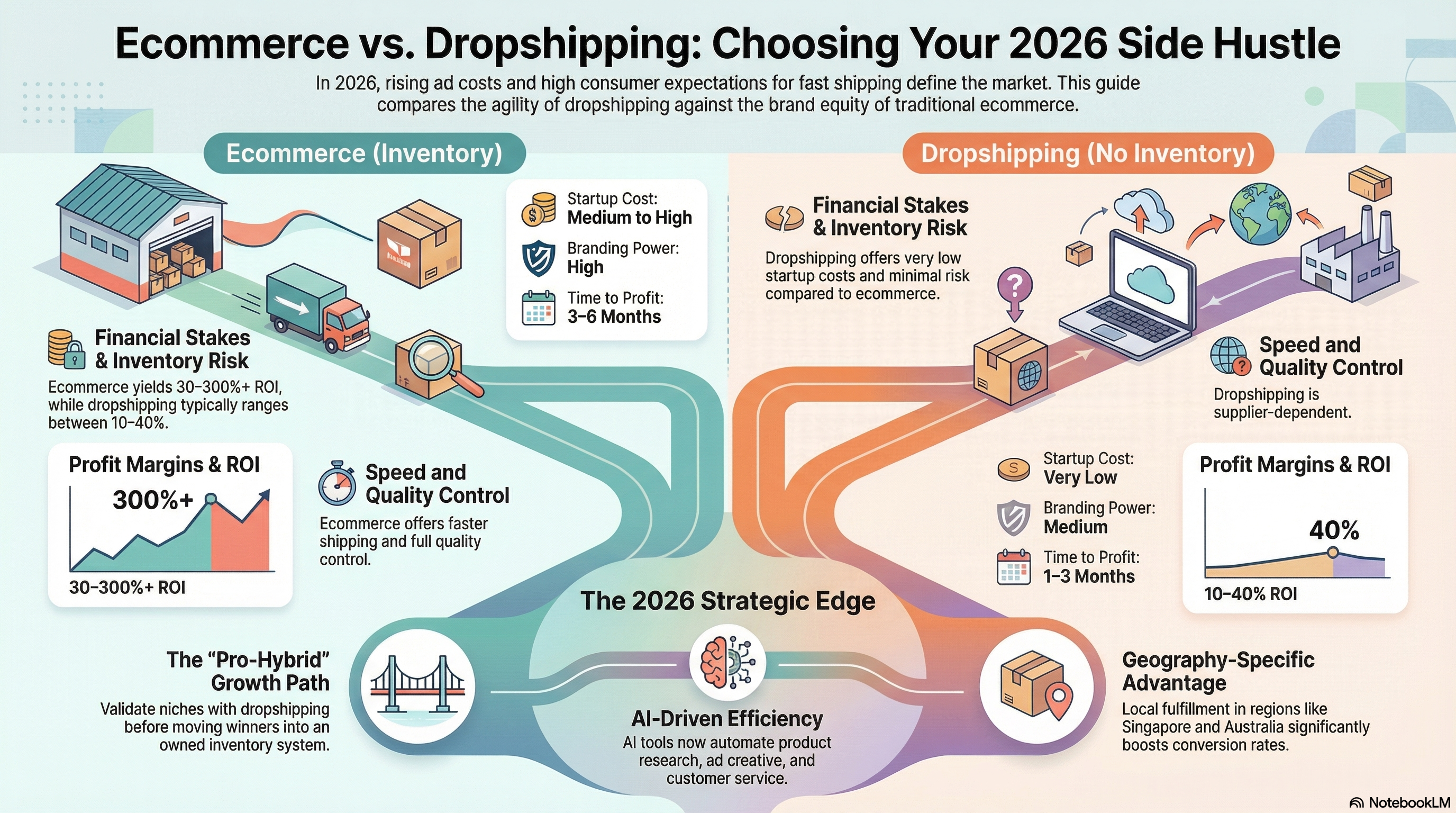
Ecommerce: You own inventory, warehouse storage, fulfillment systems (3PL or in-house), and customer experience end-to-end.
Dropshipping: You sell products that a supplier fulfills on your behalf — no inventory needed, but you have less control over fulfillment and quality.
| Comparison Point | Ecommerce (Owning Inventory) | Dropshipping (No Inventory) |
|---|---|---|
| Startup Cost | Medium to High | Very Low |
| Inventory Risk | High | Minimal |
| Profit Margins | Higher | Lower due to supplier cuts |
| Quality Control | You control it | Supplier dependent |
| Shipping Speed | Faster (if local or 3PL) | Slower (if overseas supplier) |
| Branding Power | High | Medium |
| Operational Complexity | High (inventory, returns) | Lower (handled by supplier) |
| Customer Experience Control | Full | Limited |
| Scalability | Very High | High but capped by supplier |
| Tech Stack Requirements | Ecommerce platforms + inventory management | Shopfront + supplier integrations |
| Best Suited For | Brand builders & long-term plays | Test markets & low-risk entry |
| Case Study ROI Examples | 30–300%+ with good supply chain | 10–40% in early testing phases |
| Fulfillment Models | 3PL, Amazon, warehouse | Supplier/print on demand (POD) |
| Time to Profit | 3–6 months | 1–3 months (often faster) |
| Customer Trust Perception | Higher | Lower (perceived retail) |
| Support Complexity | More involved | Less involved (supplier handles shipping) |
| Tool Category | Tool | Why It Matters |
|---|---|---|
| Platform | Shopify / WooCommerce / Adobe Commerce | Full control of store, customization, and automation |
| CRM | Klaviyo / HubSpot | Owned customer data + segmentation |
| Inventory | SkuVault / TradeGecko | Real inventory, forecasting, reorder alerts |
| Fulfillment | ShipBob / Deliverr / 3PL Warehouse Manager | Fast delivery — crucial in 2026 |
| Analytics | GA4 + AI tools (like DashThis) | Actionable insights tied to margins |
| Tool Category | Tool | Why It Matters |
|---|---|---|
| Supplier Sourcing | Spocket / Syncee / CJ Dropshipping | Quality suppliers + faster shipping options |
| Integration | DSers / Shopify Connectors | Easy order routing |
| Product Research | Zik Analytics / Sell The Trend | Data to choose winning products |
| Automation | AutoDS / ShopMaster | Order automation + price syncing |
| Ads Assistance | AI Creative Generators (HeyGen, Synthesia) | Faster ad asset creation |
| Niche Category | Ecommerce Advantage | Dropshipping Advantage |
|---|---|---|
| Climate / Weather Products | Local inventory → faster shipping for seasonal spikes | Test seasonal products quickly |
| Geo-Specific (Singapore, Australia, EU) | Local fulfillment = 2-day shipping (huge conversion boost) | Market test without inventory risk |
| Sustainable / Eco | Own branded eco products → premium pricing | POD eco products with low upfront |
| Health & Wellness | Regulated inventory control → trust | Test sub-niches (sleep, gut, stress) |
| Home Tech / Smart Devices | Must control quality → less returns | Dropship accessories → lower risk |
AI helps with:
This means your store can be run with less human capital.
Fast shipping, transparent policies, robust support — you must meet these or conversion tanks. Ecommerce with local fulfillment wins automatically here.
Brands with strong customer lists (CRM + owned media) outperform pure acquisition plays.
Example:
Case Study: Climate Comfort Store (AC Filters & Eco Fans)
Start: Q1 2025
Inventory: Held locally (warehouse)
Outcome:
Takeaway: When delivery time is mission-critical, owning stock beats dropshipping.
Case Study: Sleep Wellness Accessories
Start: Q2 2025
Products: Sleep masks, white noise devices, ergonomic pillows
Outcome:
Takeaway: Dropshipping is a product discovery engine.
If you don’t want to start from zero, consider buying ecommerce or dropshipping stores on Flippa:
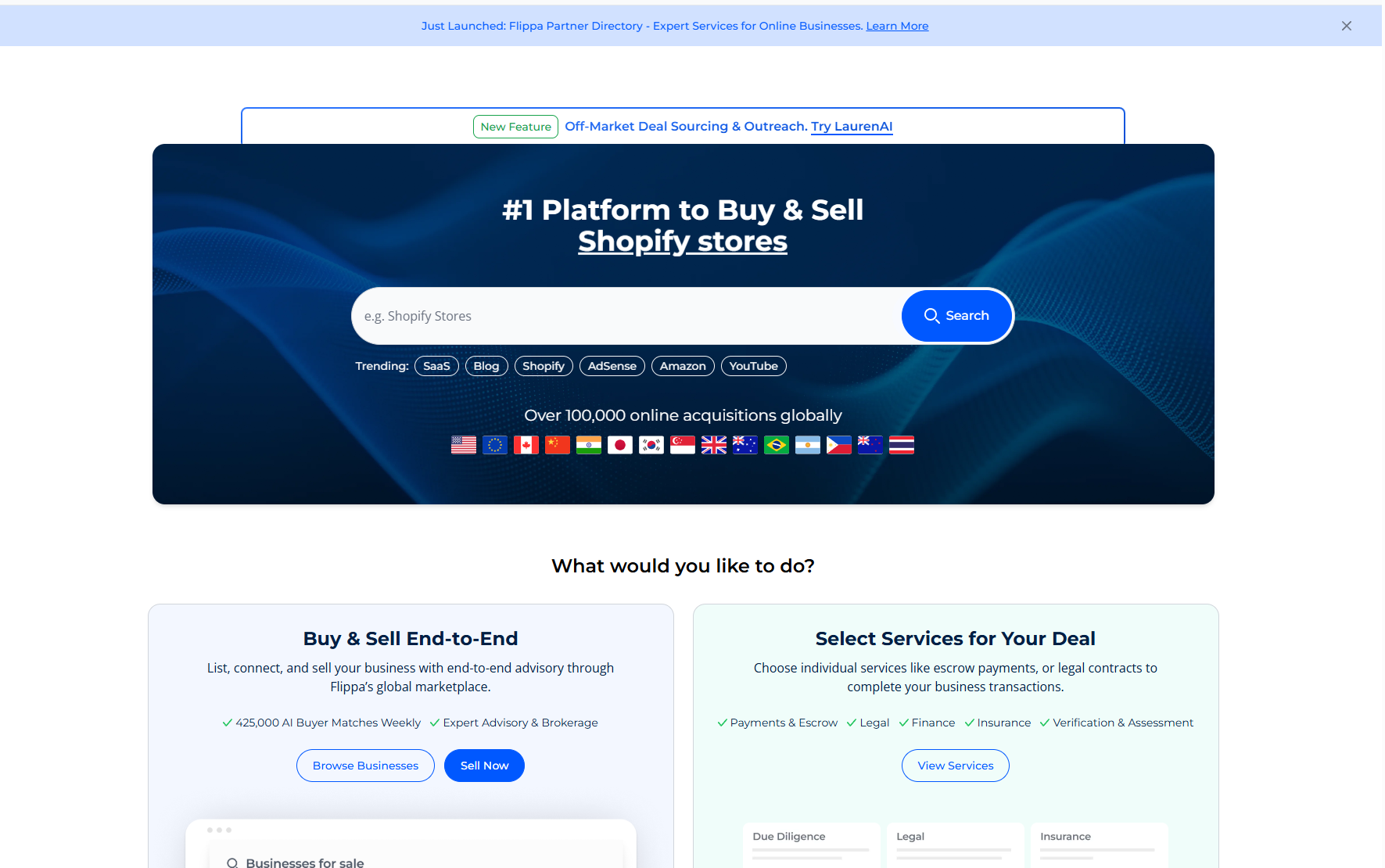
Just be diligent:
Buying a store is like skipping the first 6–12 months of grind.
Choose Ecommerce if: ✔ You want brand control ✔ You want higher margins ✔ You can manage fulfillment ✔ You want long-term equity
Choose Dropshipping if: ✔ You want low startup cost ✔ You want to validate fast ✔ You want to test niches rapidly ✔ You prefer automation over inventory ops
Best Approach (Pro Hybrid): Start with dropshipping to validate, then move winners into your own inventory system, or buy a store on Flippa and scale it with strong tools and geo advantage.
Inspired by the rise of ChatGPT Shopping and the creator economy shift into AI-assisted e-commerce search.
Turn Shein’s shipping chaos into cash—sell certainty to frustrated shoppers who just want their packages to arrive